


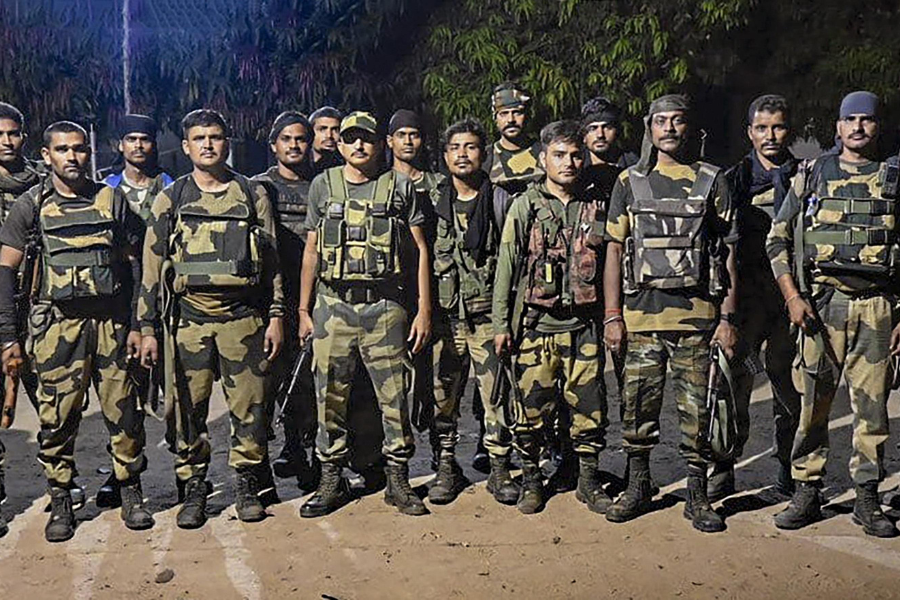
War against Maoist terror: An important development in the fight against Left Wing Extremism (LWE) is the death of top level Naxalite leader Madvi Hidma during a confrontation with the security forces. Hidma used to command the infamous CPI (Maoist) Battalion 1.
He had killed hundreds of security personnel in more than two dozen attacks during the 2000s, including 37 jawans in two strikes in 2017. His killing, along with other successful operations against the Maoist leadership and the current wave of surrenders, is proof of the Center’s plan and the steps taken by a number of states to address the LWE problem before Home Minister Amit Shah’s deadline of March 31, 2026.
In the forest regions of Chhattisgarh, Jharkhand, Maharashtra, Andhra Pradesh, and Telangana, Hidma and other Maoist leaders were able to take advantage of the topography, lack of police presence, and limited local intelligence network for years. However, in recent years, that scenario has undergone significant changes.
Also Read:
With more resources at their disposal, police units have built their bases in the interior and performed well. Nambala Keshava Rao, also known as Basavaraju, the general secretary of the CPI (Maoist), and 27 other Naxalite cadre were slain in May. Politburo member and party ideologue Mallojula Venugopal Rao (also known as Sonu), members of the Central Committee Rupesh and Chandranna, as well as a number of cadres, have recently surrendered, indicating a rising disenchantment with violence inside Maoist ranks.
The Center’s surrender policy and state governments’ initiatives to help former LWE cadres rehabilitate, acquire new skills, and integrate into society are also showing results. A total of 1,850 Maoists have surrendered to the security forces and abandoned violence over the past year alone.
Thippiri Tirupathi, also known as Devuji, and Misir Besra, also known as Sunirmal, are two of the top CPI (Maoist) leaders who are still at large. A shrinking movement is led by them. While capturing them is still a top objective, maintaining the edge on the political and developmental fronts is just as crucial. It is crucial that the thana be only the beginning of governments’ more comprehensive and in-depth involvement with regions that were previously impacted by naxalism.


 Battalion 1)